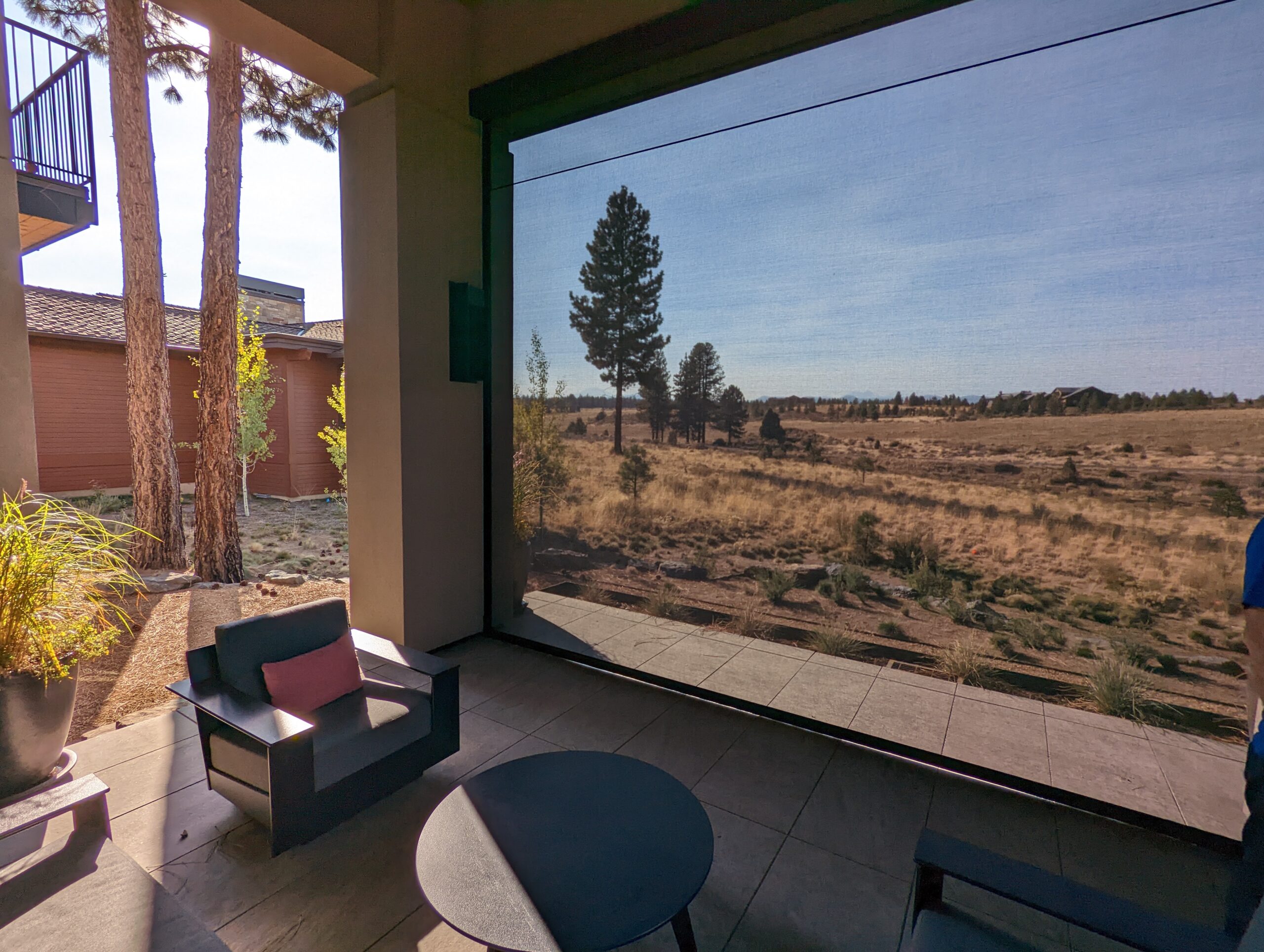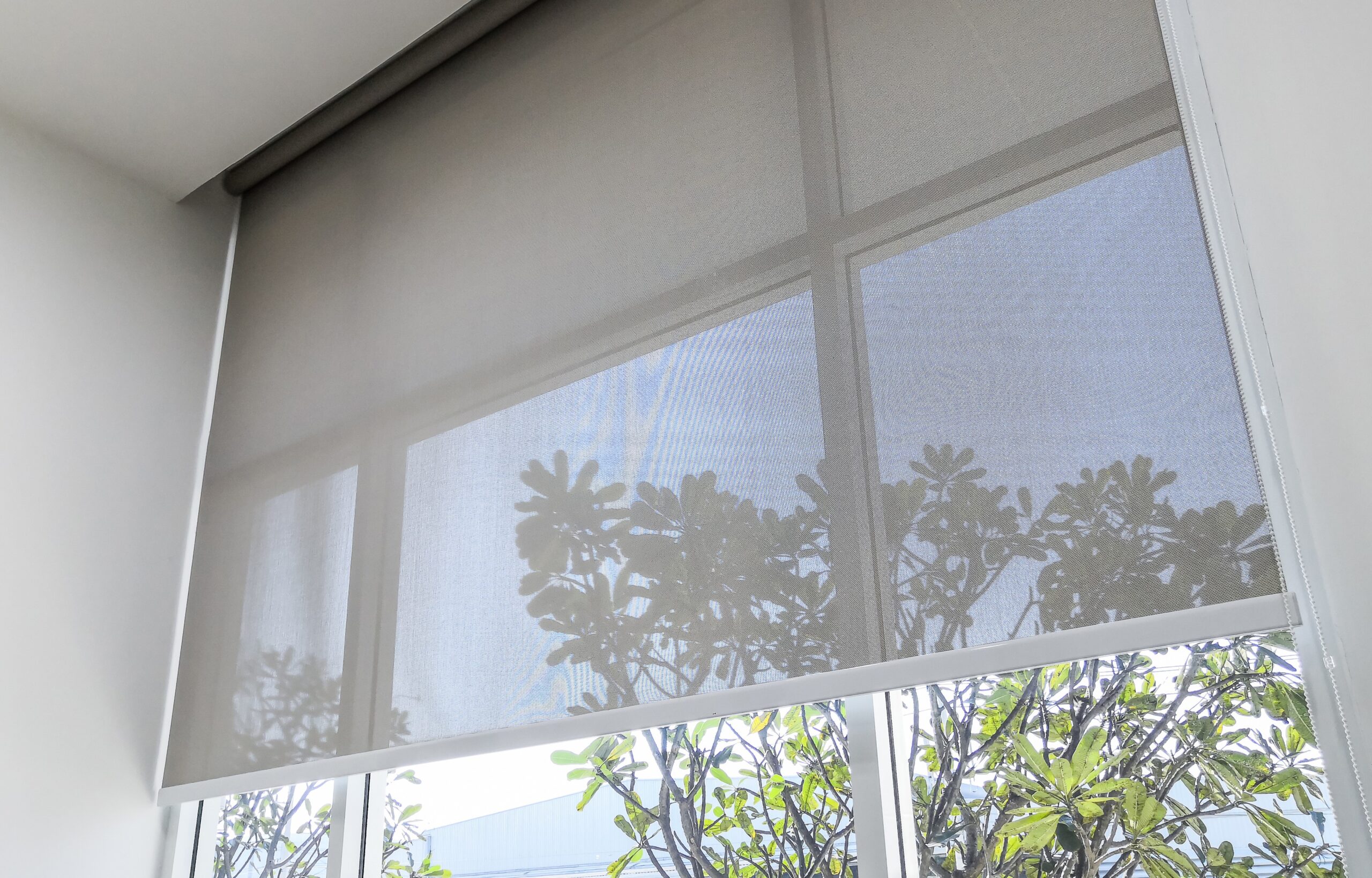
When choosing between having roller shades versus solar shades installed in your outdoor patio space, you have a few things to consider to ensure the option you choose will be the right fit for your home. The core question that we have to ask is this. Do you want to block the weather (wind/rain) or just the sun? Keep reading the article below to learn about the differences between roller shades and solar shades, and what is the right option for your home.
Why Does Choosing the Right Shades Matter?
Eye Health and UV Protection
If your main goal is for the shades to protect you from UV rays, then having a solar shade installed on your outdoor space would be the best option. Solar shades are made with solar mesh that only allows a small amount of the sun’s light into the area they’re installed on. Ensuring your outdoor space is protected from harmful UV rays will ensure your eyes are protected as well. For optimal eye health, we recommend having a 95 or 97 grade solar mesh installed in your solar shades.
Comfort and Enhanced Vision
For enhancing comfort and visibility in your outdoor space, the best option would be solar shades. Solar shades are designed to filter the harsh elements of the sun while maintaining your connection to the outdoor view. The comfort these shades provide is a result of optimal glare control and airflow. To enhance comfort while still maintaining visibility in your outdoor space, we recommend having a 95-grade solar mesh installed in your shades.
Style and Confidence
While both shade options are primarily functional, the right choice definitely contributes to the overall style and confidence of your outdoor space. Directly comparing the two shade options, solar shades offer more versatility, a modern look, and the confidence that comes from a functional and high-tech solution.
Safety
The question of safety is a crucial one, and breaks down into three key areas: UV protection, child/pet safety, and structural/wind safety. For overall safety in an outdoor space, solar shades take the cake due to their intended design for UV and glare protection. Solar shades will provide the most safety as they address the most common daily health risk in an outdoor space, being UV exposure and eye damage from glare.
Understanding Roller Shades
A roller shade is a simple and versatile window treatment that consists of a single piece of fabric or material attached to a roller tube. The shade can operate by using a clutch system, spring mechanism, or electric motor to roll the fabric around the roller tube at the top of the window or opening.
This design allows the shade material to be completely hidden when fully raised or not in use, and then will retract down across the window or opening when you manage light, weather, or add privacy to the space. Roller shades can be made with a versatile range of materials such as blackout material, sheer fabrics, and solar mesh.
Features and Benefits of Roller Shades
- Maximum privacy
- Light control and insulation
- Wide variety of colors, materials, and opacities
- simple, clean look
- UV protection & energy efficiency
- Durability & easy to operate
- Low maintenance & cost-effective
- Sleek and minimalist design
- Versatility & easy to layer
- Concealment when not in use
Ideal Use Cases for Roller Shades
Roller shades are a versatile product that can be made with almost any material opacity, which allows them to solve different problems in different spaces. Incorporating roller shades into your home can elevate the functionality of your home and make it more enjoyable for you, your family, and house guests.
Outdoor Dining Areas Needing Privacy
Outdoor roller shades are an excellent solution for enhancing privacy in your outdoor dining area. Outdoor roller shades are made of woven fabrics that will effectively block the view into your dining area, so you and your family can enjoy the space without the worry of peaking eyes looking in. Outdoor roller shades will retract back into their cassette when you’re done using them, staying out of sight and not talking away from the existing aesthetic of your outdoor dining area.
Small Patios with Strong Sunlight
Roller shades for small patios with strong sunlight exposure are a great option to protect you and your family. Their compact design ensures that they don’t take up valuable space, and they retract back into their cassette so they aren’t permanently across your patio opening. Roller shades with solar fabric installed can block up to 95% of the harmful UV rays from the sun, and will make the experience on your patio more enjoyable.
Homeowners Prioritizing Shade Over View
For homeowners whose priority is maximizing shade and relief from intense sun, blockout or low-openness shades are the superior choice. Installing a roller shade for blackout or solar protection purposes will maximize thermal performance, making your patio usable even during the hottest part of the day. These materials used in roller shades will also offer privacy so you can fully relax and enjoy your outdoor space without worry.
Understanding Solar Shades
Solar shades are a specific type of roller shade made with a mesh or screen fabric, designed solely to manage solar heat and glare. Solar shade material can range from 90-grade to 97-grade, depending on how much sunlight you want to block from entering the space they’re installed on. Solar shades are a great solution to install on windows or openings with high exposure to sunlight, to protect you from harmful UV rays.
Features and Benefits of Solar Shades
- Sunlight filtering & UV protection
- Glare reduction
- Privacy & energy efficiency
- Customization & aesthetic flexibility
- Motorization & durability
- Easy maintenance & privacy
- Reduced energy bills
- Improved comfort
- Protection for interiors
- Increased home value
Ideal Use Cases for Solar Shades
Solar screens are highly versatile coverings primarily used to manage sun exposure and heat in various outdoor and indoor settings. Solar shades will limit the amount of sunlight and UV rays that enter your home, which will naturally keep the temperature lower and reduce your need for air conditioning and other cooling methods. Solar screens will also protect interior furnishings and flooring from fading due to sunlight exposure.
Rooms with Excessive Sun Exposure
For rooms facing excessive sun exposure, installing solar shades will be the most effective solution for managing heat and light. Solar shades are specifically designed to filter harsh UV rays and reduce solar heat gain in your home. With the help of solar shades, you will reduce your home’s energy consumption as your space will be more climate-controlled. This will reduce the load on your air conditioning unit and also protect your furnishings from being damaged by UV exposure.
Living Rooms, Dining Rooms, and Kitchens
Solar shades are a highly strategic choice for the most active rooms in your home – the living room, dining room, and kitchen. Solar shades are great when installed on these areas of your home because they will balance light control while also controlling heat. Solar 95-grade mesh will provide adequate light control while not being fully blackout, to maintain some of your view of the opening the shades are installed on.
Media Rooms and Home Offices
Solar shades are a great option for maximizing comfort and function in high-tech home spaces like media rooms and home offices. Solar shades are engineered to eliminate screen glare on monitors and TVs, which is crucial for reducing eye strain and increasing productivity during work or entertainment sessions. By significantly cutting down on solar heat gain, these shades help maintain a stable, cool temperature for enjoyment and focused concentration in these spaces.
Sunrooms and Patios
Solar shades are the ultimate solution for making sunrooms and patios comfortably usable throughout the day, effectively transforming these sun-drenched spaces. The shades are designed to block solar glare and heat, allowing you to relax or entertain without the discomfort of intense sun exposure. For sunrooms, this means significantly reducing interior temperature and protecting plants and furnishings from UV damage. When installed on patios, the shades create flexible, cool outdoor retreats, ensuring maximum all-day enjoyment by providing essential shade on demand.
Commercial Buildings
Solar shades are a worthwhile investment for commercial properties seeking both operational efficiency and a productive environment. Solar shades can block up to 95% of solar heat gain, which will reduce your HVAC demand, leading to long-term savings on utility bills. These shades will also effectively filter solar glare, which will protect your commercial furnishings and belongings from UV damage. This will maximize employee comfort and productivity in office settings.
Side-by-Side Comparison: Roller Shades vs. Solar Shades
Light Control
Focusing specifically on light control, the choice between solar shades and standard roller shades depends entirely on whether you want to filter light or completely block it. If you want light control while still maintaining your view, solar shades would be the best option. If you want light control that will completely block light from coming in, roller shades with blackout material would be your best bet.
UV Protection
When it comes to protecting your furnishings and skin from harmful UV rays, both options offer protection, but solar shades are solely designed for UV protection. Roller shades with blackout material will reduce UV damage as well, but you won’t maintain the same visibility compared to having solar shades installed.
View Preservation
The ability to maintain an outward view is the most significant differentiating factor between solar shades and roller shades. Solar shades are typically made with higher visibility material, so they are better if your main goal is to maintain the beautiful view in your home. Roller shades are better for privacy or complete blackout, but will allow less light and visibility through.
Privacy
When comparing the two options purely for privacy, standard roller shades are generally superior because they offer reliable privacy day and night, especially when made with opaque fabrics. Solar shades are a good privacy option during the day, but aren’t great at providing privacy at night. Roller shades made with a blackout material will offer great privacy for whatever occasion, and are your best option.
Aesthetics
Comparing the two shade options for aesthetic purposes is where it gets subjective and depends on needs and personal preferences. Both shades offer a clean, minimalist aesthetic, but they excel in different areas of design customization. If you’re looking for a clean, modern, architectural look that prioritizes light filtering while still maintaining your view, then solar shades would be the better aesthetic option. If you want the flexibility to match specific colors, textures, or patterns to your existing decor, roller shades would be the better option.
Airflow
When comparing the two shade options in terms of optimized airflow, solar shades are definitely the better choice for promoting and allowing airflow. If your goal is to have the shades lowered to manage sun and heat, but you still want the air to circulate through the opening, solar shades are the superior option because of their breathable mesh material. Roller shades made with blackout material won’t allow much airflow to circulate through, which isn’t ideal if your main goal is optimizing airflow in the space where you have the shades installed.
Price Range
The best price range for standard roller shades and solar shades is quite similar, as they use the same core mechanism. The final cost is heavily influenced by the fabric choice and features you decide to have the solar shades made with. The single biggest pricing factor is the overall size of the shades (width and height), while customization options such as operating hardware, motorization, and color will also dictate the price. In general terms, a side-by-side comparison of a standard solar shade with a standard roller shade made with blackout material will have the solar shade being the less expensive option, but the difference will be marginal.
Key Factors to Consider When Choosing
Purpose: Privacy vs. View
When choosing between having solar shades installed in your home or business, compared to roller shades, you will need to determine if privacy or maintaining your existing view is more important. Solar shades will block the harmful UV rays from the sun while still maintaining the view of the opening you have the shades installed on. Roller shades made with blackout material will block most or all light from entering the space, but will also block the view.
Sunlight Intensity
When comparing the two types of shades specifically for managing harsh sunlight intensity, their purposes are distinct and cater to different needs. If you want to control the intensity of bright sunlight (reduce glare and heat) while keeping the room lit and maintaining a view, choose solar shades. If you want to eliminate the intensity of sunlight completely (achieve darkness) for sleeping or viewing screens, choose blackout roller shades.
Climate and Weather Resistance
The comparison of the two shades for climate and weather resistance ultimately depends on whether the shades are designed for indoor or outdoor use, and which material coatings are applied to the metal. Solar shades are the better option for resistance to moisture, humidity, and fading due to their non-porous construction. For resisting cold air and drafts, thicker blackout roller shades are a better solution and will insulate the area of the home where they are installed.
Maintenance
Both solar shades and standard roller shades are considered low-maintenance home improvement products because they both utilize durable, synthetic fabrics and a simple, enclosing roller mechanism. For both shade products, you want to wipe down the fabric material regularly to ensure debris doesn’t build up and get caught in the mechanism.
The tracks should also be inspected to ensure debris isn’t building up and blow out anything that is lodged inside. If you have a mechanical issue or your shade fabric has been torn, you will need to contact the installer to have them replace or fix the issue. Do not try to fix the shade yourself or take apart components, as your warranty will be void.
Aesthetics and Architecture
The aesthetic and architecture of the two shade products differ and are a key consideration when deciding which option is best for your home. Both products offer a clean, minimalist look, but their functionality dictates where each excels aesthetically. Solar shades made of solar mesh will allow for more visibility and light to pass through, while roller shades with blackout material will keep all light out and achieve total darkness in the space.
Combining Both: Is It Possible?
Yes, it is possible to incorporate both solar shades and roller shades in your home. This is often referred to as dual shades, offering maximized light control and efficiency. This method places the solar shade as the outer layer to filter sunlight and harmful UV rays during the day, maintaining your view and room brightness. For evening hours, the inner blackout roller shade is used to provide total privacy and light elimination, which will transform the room into a dark sanctuary for sleeping or movie watching. This seamless layering system delivers year-round utility, optimizing both energy savings and the room’s desired ambiance effortlessly.
Which One Should You Choose?
So now you’re trying to figure out which product to have installed in your home? The best solution ultimately depends on what problem you are trying to solve. If you are primarily trying to control light exposure and limit the amount of UV rays from entering your home, solar shades would be the better option. Solar shades are best installed in living rooms, kitchens, home offices, sunrooms, and large window openings where maintaining a view is important.
If you are trying to completely block light from entering the space you install the shade on, having a roller shade with blackout material would be your best option. Roller shades with blackout privacy will ensure maximized privacy for your home, especially at night in high-visibility parts of your dwelling. Roller shades are best installed in bedrooms, bathrooms, home theatres, or any ground-floor windows where absolute privacy is necessary.
Mirage retractable screens manufactures premium motorized screens that are custom-made for your home and installed through our network of professional installers across North America. If you are interested in learning more about having motorized screens or shades installed in your home, please visit this page – fill out your information, and one of our representatives will follow up with you and guide you through the process.
Frequently Asked Questions (FAQs)
Solar shades and roller shades are very similar home improvement products, and deciding between which one is better depends on what your home’s needs are. Roller shades are the better solution for most applications, while solar shades are better if you have lots of sun-facing windows or glare coming into your home.
Yes, you can see through solar shades at night. Solar shades are made from a woven mesh fabric with small gaps that allow you to see through during the day, with the reverse effect occurring at night.
Yes, both roller shades and solar shades are weather-resistant home improvement products. During storms or extremely high winds, it is necessary to roll the shades up to ensure no damage occurs.
Solar shades are typically a bit more expensive than roller shades, but it depends on the material you choose and other customizations. Roller shades and solar shades are similar home improvement products, and the price difference between the two products will be minimal.
You could install roller or solar shades yourself, but we don’t recommend that. Roller shades and solar shades should be installed by trained professionals to ensure they are installed properly and will last the intended lifespan of the product. An added benefit of having trained professionals install your roller or solar shades is that they will come with an installer’s warranty if any problems occur.